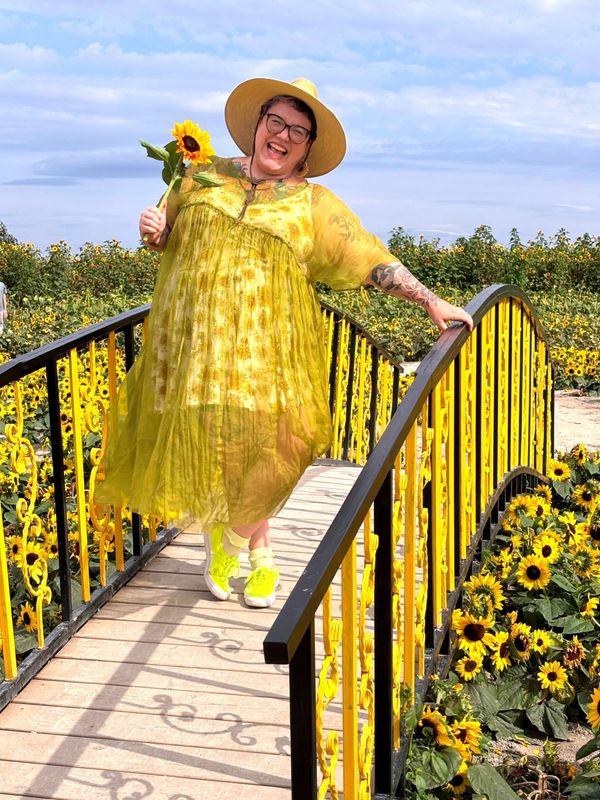
more like the COOLEST month 😎

What did I do this month? GREAT QUESTION LET ME CHECK.
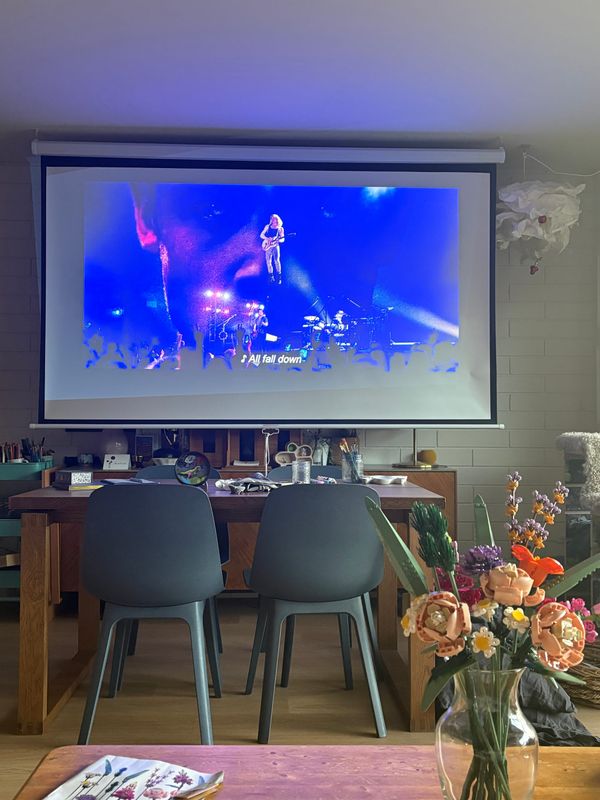
I had an absolute blast guesting on the UK-based podcast Groovy Movies to talk about Clever Girl: Jurassic Park. When the hosts let me know that the rest of the episode would be focusing on Project Hail Mary I decided to take myself out to see it as well. I knew almost nothing about the movie but figured I like Ryan Gosling and I love space so why not?
It turned out to be a remarkably tender and beautiful movie – and, as we discuss in this episode, it has some thematic overlaps with Jurassic Park including centring the capacity for care as our primary survival skill.
Over at Witch, Please Productions we made the decision to move the original (2015-2018) run of Witch, Please to Patreon; it's not paywalled, but it will exist as its own RSS feed now. To mark the occasion, we rereleased our first ever episode, and boy do we sound like tiny babies!
Plus new episodes of Material Girls and Hot & Bothered! If you ever wonder if I'm tired, please know that the answer is a decisive yes.
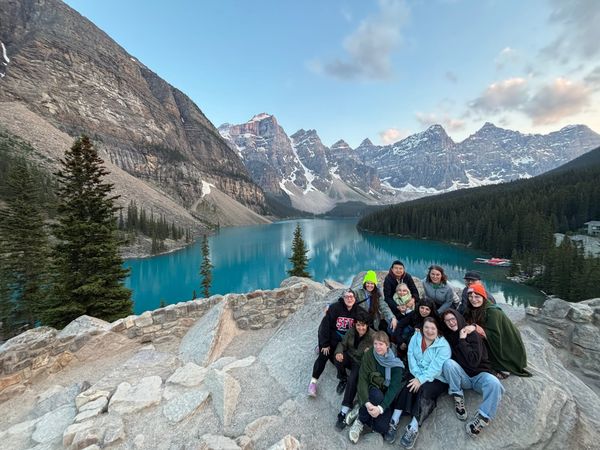
Have I told you that I'm working on a new book? I've changed how I talk about this from "kind of sort of noodling on" to "legit working on" because I am a sucker for institutional validation (see: my entire life) and I got accepted into a Banff Summer Writers Residency to work on this book. So it must be real.
The working title is Thoreau in Disneyland and here's how I described it in my residency application:
In this new collection of essays, I will turn my attention to those things that I find most perplexing. The project of this book is twofold. First, as a work of life-writing, it will explore the urgent call for community building in an era when we are being constantly reminded that “the cost of community is inconvenience.” I will draw here on my own experiences of navigating interdependence within queer community as a childless, asexual, and aromantic person whose life has thus far been characterized by the rootlessness typical of the academic career path. Second, as a work of cultural criticism, this book will explore topics that often evoke feelings of shame, guilt, disdain, anger, and other so-called “bad” feelings. In “Reading the Romance,” for example, I trace my own history of reading romance novels and the complex feelings of shame evoked by both the deliberate secrecy of my reading habits and my use of the Kindle Unlimited platform to source books. In “Yes, It’s Embarrassing” I unpack my two decades (and counting!) of veganism through the lens of my own relationship to food as a fat person, the links between veganism and purity culture, and the complicity of organizations like PETA in the disruption of Indigenous foodways. And in “Do-Over” I use indie game Night in the Woods to grapple with a friend’s death by suicide after he was publicly accused of sexually harassing students.
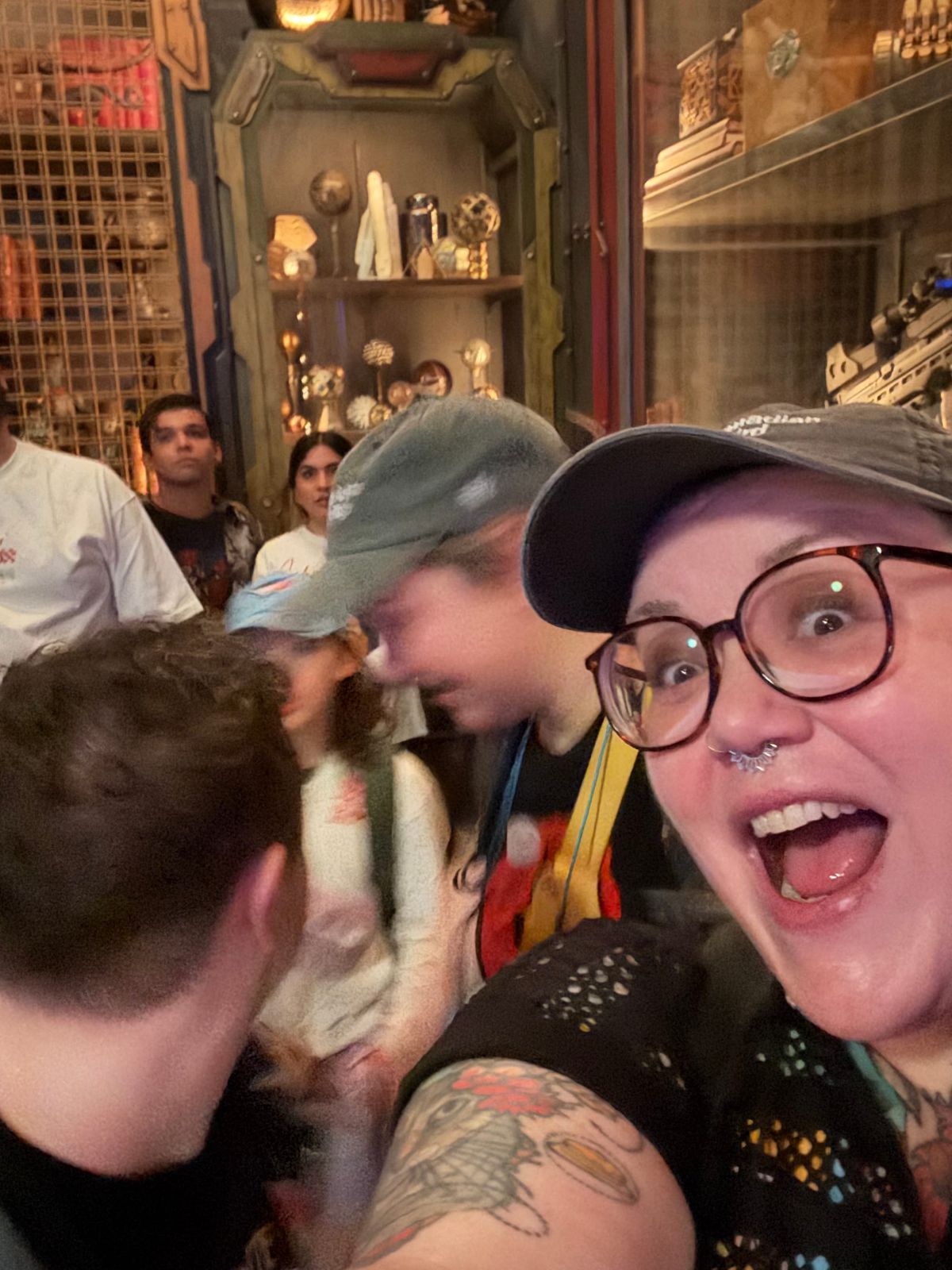
I'm telling you about this because 1) I'm excited to be done my current term as Director (so close!) and the prospect of working on this book is one the things that's getting me through but more importantly 2) I went back to Disneyland this month and I need you to understand that actually it was for research.
As I write this, I'm supposed to be working on the script for our next episode of Material Girls, which will spring from this trip (originally I was going to write an episode about miniatures, but after a few weeks of idle research I just couldn't come up with an angle on the topic that felt intellectually juicy to me! I just think they're neat!).
So I pivoted to something I noticed while I was pre-gaming Pixar movies in anticipation of this Disney trip. I watched Inside Out and Inside Out 2, Encanto, Monsters Inc., and Luca, and along the way I noticed something interesting: so many of these movies are about the hidden labour that goes into creating a supposedly "natural" phenomenon. In Monsters Inc., a child's natural fear produces a resource that an entire society requires, one that is extracted systematically in a highly industrialized setting. The revelation that laughter has a higher return on investment than screams doesn't change the basic mechanic here: spontaneous childish affect is a resource to be mined by harried adults.
In the Inside Out films this mechanization of the natural is made even more literal, with the inside of every human's mind imagined as a kind of elaborate centre of production, complete with corporate hierarchies: the lowly memory workers, for example, do their mundane jobs in the deepest recesses of the mind, while the charismatic emotions run the show in HQ. These fantastical characters are all voiced by adults and all extremely dedicated to their jobs, and their jobs are to create core memories that will in turn produce a robust sense of self.
Even in Encanto, which unfolds in a distinctly non-mechanized and non-corporatized setting, there's a simmering anxiety about the labour that underpins the seeming spontaneity of magic. But that magic is in fact resting on an unseen foundation of emotional labour: both Mirabel's care for her family and Bruno's quiet labour in the walls, fixing the cracks that have been spreading through the house.
All of this emphasis on the unseen and anxious labour that underpins the appearance of magic made me think about Pixar's incorporation into the Disney corporation, one that is in the business of making magic. Pixar has also been central to the shift of Disney films from G to PG ratings: that is, from movies that are for children to movies that are for the whole family and that thus communicate in particular and deliberate ways to the adults in the audience. Adults who, in many cases, are also busy with the unseen and anxious labour of making magic for their children. I think maybe what these Pixar movies are doing for me is complicating the simplistic narrative of Disney as a site of escape, which is often how it is figured in critical theorizing: as somewhere people go to have a whole intricate set of affective economies put to work on us. Pixar movies don't deny but expose the kind of labour that produces those seemingly magical and spontaneous experiences.
There's more to be said here, about the Disneyfication of childhood and Inside Out's introduction of the concept of "core memories" and the speed with which "magical" moments become a requirement for a good childhood, one that can be engineered if you just spend enough money, but I gotta go write this script! BYEEE!!!