Greetings from the Grief Bog

Content warning: death and grief
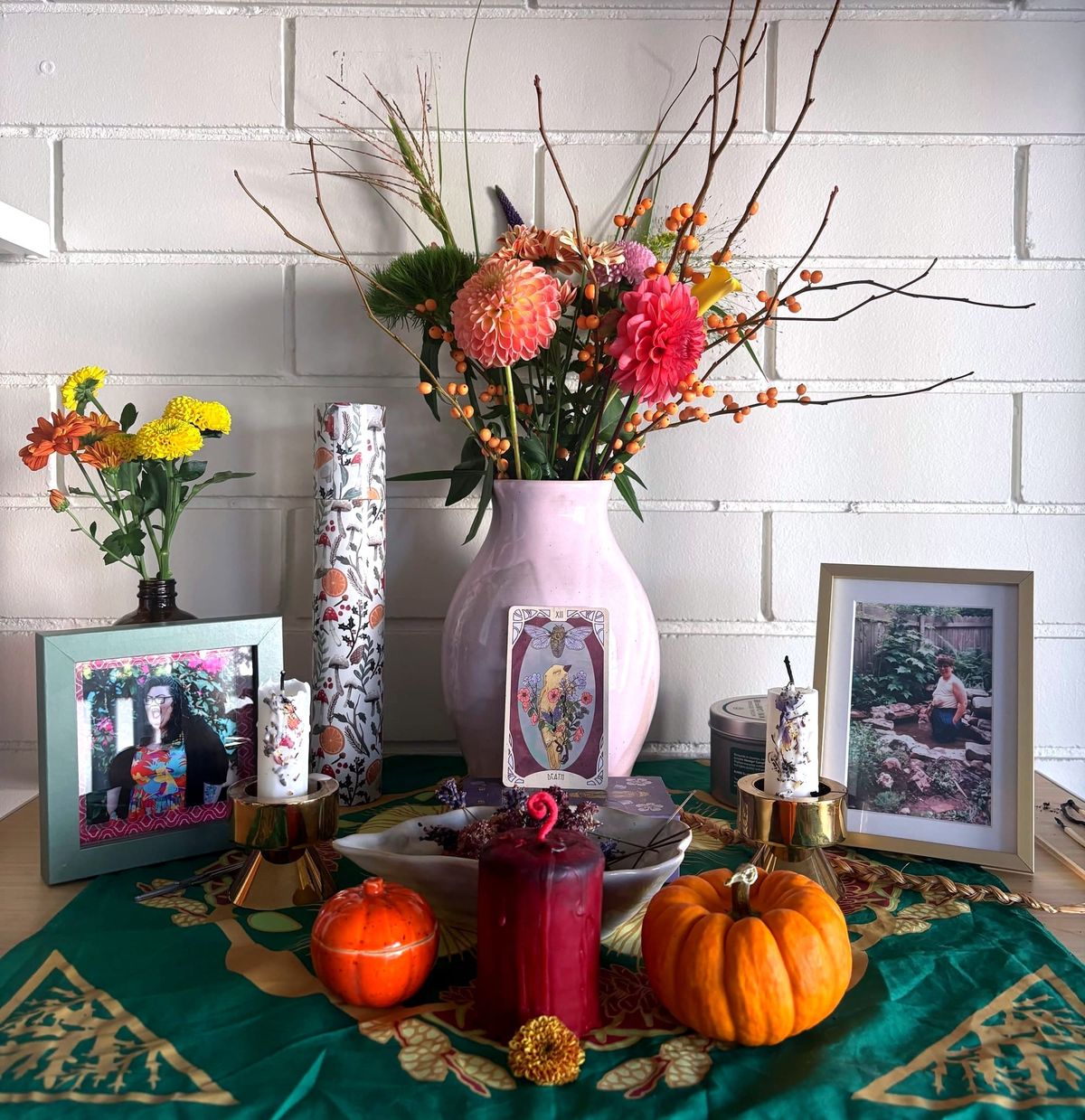
This supposedly-monthly newsletter notably missed a month, and I have a simple and devastating reason for that: at the end of September, my beloved friend, the brilliant writer and podcaster and cultural critic Andrea Warner, died after almost three years with endometrial cancer. Andrea was one of the first friends I made in Vancouver, and one of the first people to make this city feel like home. She was famously generous-hearted and welcoming, forming deep attachments everywhere she went and then maintaining them with astonishing care over many decades. She collected people naturally through her warmth and genuine fascination with others, qualities that also made her an incredible interviewer: many of the musicians she profiled in her storied career as a music journalist ended up becoming fans of her because she was so damned good at what she did. I was certainly a fan, as well as a co-conspirator and collaborator and friend.
If you aren't already familiar with Andrea's oeuvre, I would love for you to seek out some of her work, whether her books, her music journalism, or her podcasting. What a gift that she left us with so many of her words.
Here's a double-list of all the podcasts we've released since September. It's fewer new episodes than we'd normally have, because the cool thing about Witch, Please Productions is that we try to really live our values which means that if someone is not doing well we give them time and space. So I've been taking that time and space, and Coach and Marcelle have been holding it down without me, and baby? That's praxis.
Like anyone who's moved through the world with attachments (i.e., everyone), I have experienced my fair share of loss and grief: the endings of relationships, the loss of opportunities, the failure of dreams. All of these have been shaped by my mother's long sickness (eight years with cancer) and her eventual death by suicide when I was sixteen. For decades following that, I did what I could to shield my heart from further pain, seeking emotional safety via maximum autonomy: relational, financial, and emotional independence were my primary goal. The dark side of caring about anything is risking its loss, and so I tried to keep my care guarded, to always have one foot out the door. Much of my personal process of healing has been relearning that the vulnerability of loving deeply is absolutely worth the pain.
Andrea's death is a first of many kinds for me: the first death of a beloved friend and peer of roughly my own age (and the age of my mother when she died); the first significant personal loss since I started doing trauma therapy that taught me to open my heart up to deep and vulnerable intimacy; the first collective loss within the community I have co-constructed here in BC. It has been excruciatingly painful and also, in its own way, healing. So much of how all of us who love Andrea have moved through this experience has felt like a chance to heal wounds from my mother's death and to prove to myself and my beloveds that we can do this unbelievably hard thing – losing someone we love so much that life without them feels impossible – with care and community and gentleness.
My mother died alone, via a deliberate overdose of the many drugs she had on-hand to treat her cancer and its side effects. I was back at school maybe two weeks later (I can't remember exactly – so much of that time is just gone) because my school counsellors thought it was best for me to get back to normal. Very quickly, talking about my grief became something that gave me intense shame; I hated crying in front of people, I hated being that girl with a dead mom, I hated how visibly uncomfortable became became around me when I named my loss. I learned that death was simply awful, a spectre to avoid at all costs.
What a cruel thing, I've come to realize, to tell a grieving child that her grief is too much. What a cruel thing to shove our beloved dead to the perimeters of our lives and hesitate to speak their names in case we make someone uncomfortable. What a cruel thing to turn one of life's only guarantees into a site of shame and isolation.
Andrea died much more quickly than any of us anticipated, but she also died absolutely surrounded by loved ones. So many friends and family gathered to keep vigil at the hospital that we overflowed into the hallways, turning the vestibule outside the elevator bank into a party of sorts, the institutional-grey table stacked with snacks and gatorade and tissues, each new arrival greeted by someone who could tell them what was going on. If you were crying, there was someone on hand to hold you as long as you needed. If there was an errand that needed running, there were half a dozen people jumping to volunteer.
We gave her the most beautiful death we could, and the most beautiful thing about it was how we showed up, for her and for each other, and how we're continuing to show up, letting this deep grief bind us more closely together. I've made new friends and connections since Andrea died, with other people who love her; the relational web in which she was such a central node is slowly repairing itself, not to function without her but to weave her deeply and permanently into the texture of our lives and communities. And every time I name this loss, every time I mourn my beloved friend without shame, every time I cry publicly, every time my grief is witnessed and held with care, I feel that childhood part heal a little bit. She and I are learning together that our grief was never something to feel ashamed of, and that we get to name and honour and carry our beloved dead with us for the rest of our days.